USB-C Rechargeable Dive Lights: One Cable. Everywhere.
Packing fewer charging accessories is useful on a dive trip. A torch with a USB-C rechargeable battery can share a suitable cable or power source with other devices—but connector shape alone does not guarantee charger compatibility, charge speed or airline permission. This guide separates verified charging features from details that still need confirmation.
Prices and currency: Prices below are USD. Canadian storefront prices convert automatically to CAD. Check the linked product page for current pricing, selected options and availability; taxes and shipping may apply.
Quick Answer: Which Kraken NR Torches Have Verified USB-C Charging?
| Model | USD / approximate CAD | Battery / charging evidence | Full-power runtime | Best fit |
|---|---|---|---|---|
| NR-1000 | US$99.00 | 18650; built-in USB-C battery port listed | 90min | Compact travel/backup |
| New NR-1200 | US$99.00 | 18650; USB-C recharge/cable listed | 75min | 1200-lumen compact; Check availability; currently out of stock |
| NR-1800: earlier generation | US$159.00 | 21700 USB-C rechargeable listed | 90min | Previous non-laser primary; listed in stock |
| NR-1800Z | US$189.00 | B-21700 USB-C replacement listing explicitly names this model | 90min | 10–45° zoom dive torch |
| NR-LEP01 | US$465.00 | 26650 USB-C rechargeable listed | 60min flood / 120min LEP spot | Dual-beam specialist |
| Current NR-2000 | US$165.00 | Battery/cable included; format and connector not specified | 70min | Current NR-1800 replacement; confirm charging |
| NR-2500 | US$199.00 | B-26650 listed spare; confirm exact cell and port | 85min | Higher-output handheld |
The NR-1800L lists a 21700 5000mAh battery, but its current product copy does not independently specify the charging-port architecture. The NR-800 mentions an 18650 USB-C option, while the package details conflict on inclusion. The NR-4000 canister is not documented as sharing the handheld charging arrangement. Confirm the exact supplied battery rather than relying on “all NR torches” shorthand.
Why USB-C Matters for Divers
Problem #1: Cable Clutter
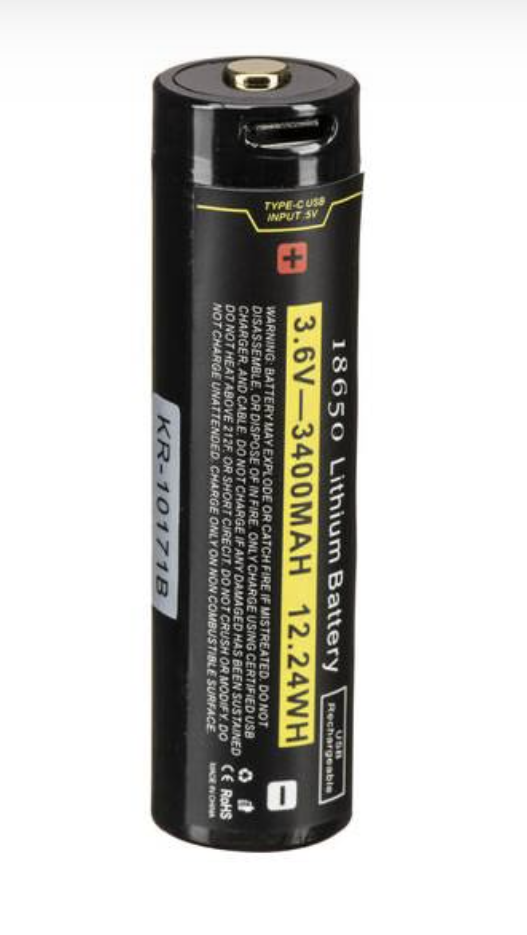
For a battery with a built-in USB-C port, you may avoid a separate charging cradle. Pack a suitable cable, power supply and a spare cable; your camera may still require its own charger. A common connector reduces clutter, but does not make every device share one charging profile.
Problem #2: International Travel
A compatible USB supply can be convenient at a resort or on a liveaboard. A mains adapter may still need a local plug adapter and must support the destination’s voltage. Do not assume that the presence of USB-C removes country-specific electrical requirements.
Problem #3: Emergency Charging
If a charging cable is lost, a suitable replacement may be easier to find than a proprietary cradle. Allow enough charging time, check the indicator according to the battery instructions, and use a fully charged compatible spare if needed. A two-hour interval is not a promise of full charge. Do not start a dive with inadequate light reserve.
Travel example: A resort USB supply can simplify charging when it meets the battery’s requirements. This is an illustrative scenario, not a verified customer testimonial or evidence that one charge covers a week of diving.
USB-C Travel Torch Recommendations
Compact Choices: NR-1000 and New NR-1200
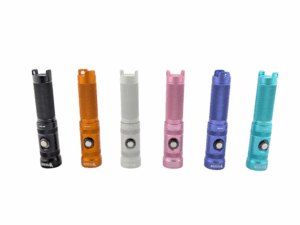
NR-1000 — US$99.00 — has 1000 lumens, a 15° beam and 90-minute full-power rating. The new compact NR-1200 — US$99.00 — has 1200 lumens, the same 15° beam and a 75-minute rating. Both are listed at 30.5 × 140mm and 165g on land, using an 18650 rechargeable battery with USB-C charging. The NR-1200 is out of stock at the time of this update; confirm availability before a trip.
What to pack: the exact torch and compatible battery, suitable cable/power supply, plug adapter where needed, terminal protection for spares, and your backup light. Weight savings depend on what chargers you would otherwise carry, so no generic gram saving is promised.
Current Primary: NR-2000, With Charging Details to Confirm
Current-generation NR-2000 — US$165.00 — offers 2000 lumens, 6° beam and 70 minutes at full power. It replaces NR-1800, but the current catalog does not identify its cell format or charging connector. Do not buy it solely on an assumed USB-C feature or order a historic NR-2000 battery for it.
Higher-Output Handheld: NR-2500
NR-2500 — US$199.00 — offers 2500 lumens, a 6° spot and 85-minute full-power rating. The B-26650 replacement is explicitly compatible and costs US$34.99. Confirm the supplied cell’s charging instructions and port before deciding what charger to pack. The old guide’s 6800mAh and five-hour charging claims are not established in the current listing.
Between dives: use a fully charged compatible spare when available instead of assuming a short surface interval can restore the battery. Never substitute a cell solely because its diameter looks right.
How Built-In USB-C Works
On a model with a USB-C port built into the removable battery, the charging electronics are part of that cell. Follow the manual’s removal and charging procedure; this is not an invitation to connect a cable while the torch is wet or open on a boat deck.
| Feature | Dedicated cradle systems | Battery with built-in USB-C |
|---|---|---|
| Equipment | Cradle plus the appropriate supply/cable | Suitable USB supply and cable; no separate cradle for that battery |
| Laptop / car charging | May work if supported; not universally impossible | Only with a suitable port/supply and permitted charging conditions |
| Replaceability | Depends on exact device | Use exact manufacturer-approved cell, not an arbitrary same-size battery |
| Speed | Depends on charger/battery | Still depends on battery, cable and supply; USB-C alone does not specify speed |
How to Charge
- Rinse the assembled light as instructed, then dry it thoroughly before opening. Keep saltwater away from the battery and charging port.
- Switch off and remove a removable battery according to the exact model’s instructions; charge it outside the torch in a dry, suitable location.
- Use the specified cable and suitable power supply. Do not charge a swollen, damaged, wet or overheated cell.
- Read the charge indicator using that battery’s instructions; do not assume every battery uses the same red/blue indication.
- Inspect and maintain seals as instructed, then refit the correct battery and close the light before the next dive.
Use the manufacturer’s method if your light has a different battery arrangement. Do not extrapolate this removable-cell procedure to the canister or a sealed pack.
Where You Can Charge
| Location | Practical check |
|---|---|
| Resort | Dry charging area; correct wall supply and local plug adapter |
| Liveaboard | Use the operator’s designated charging station and safety rules |
| Car | Suitable USB supply; avoid heat and unattended charging |
| Laptop | Supported voltage/current and suitable cable |
| Power bank | Compatible output; compare stored Wh rather than headline mAh |
| Airplane | Do not assume onboard charging is allowed; follow crew/carrier rules |
Common Questions
Can I use any USB-C cable?
Use a sound cable suitable for the exact battery and power supply. USB-C connectors do not by themselves establish voltage/current support, PD requirements or charge time.
What if I forget my cable?
Borrow or purchase a suitable replacement, then verify it against the battery instructions. Keep a spare cable and do not depend on an unfamiliar port immediately before a dive.
Can I charge from a power bank?
Only if its output meets the battery’s requirements. Charge counts cannot be calculated reliably by dividing two mAh labels: voltage, conversion loss, usable capacity and required reserve matter. No fixed number of refills is promised.
How long does the battery last before degrading?
Age, heat, storage state and charge/discharge use affect lithium batteries. Replace a cell that is damaged or no longer supports your dive reserve; no universal lifetime or claim that it outlasts the torch is supported.
Can I fly with USB-C batteries?
Check the marked Wh and your exact carrier/route. Carry spare lithium batteries in cabin baggage with terminals protected and follow current authority/carrier requirements. USB-C does not certify a battery for flight.
What if the USB-C port breaks?
Stop charging the damaged battery and use an explicitly compatible replacement after confirming the light is otherwise sound. Do not assume the same-size cell, a strobe battery or an old-generation replacement will be safe.
Which spare should I buy?
The B-21700 lists NR-1800 and NR-1800Z; the B-26650 lists NR-2500 and NR-LEP01. The B-26650 With Spring option is intended for certain older 26800-format lights—not automatic approval for the new NR-2000. Confirm NR-1800L and current NR-2000 spare compatibility with Kraken.
Flying with lithium batteries: Check the Wh label, your carrier’s rules and the applicable aviation authority before packing. Protect spare-battery terminals individually and carry spares in cabin baggage; prevent accidental activation of installed lights. USB-C is a charging connector, not airline approval. Kraken’s 18K-class 97.92Wh packs and larger 144Wh packs are not interchangeable travel cases: packs above 100Wh commonly need airline approval, and carriers may impose stricter restrictions. Do not assume every Kraken battery is below 100Wh or permitted on your route.
Bottom Line: Why USB-C Matters
A verified USB-C battery can simplify travel charging and make replacement cables easier to source. You still need compatible power, a dry charging area, the correct battery, airline checks and adequate dive-light reserve.
Quick Recommendations
NR-1000 for compact travel with a longer listed burn; new NR-1200 for more compact output when available; NR-1800Z for verified B-21700 charging and adjustable beam. Compare current NR-2000 for a non-laser primary, but confirm the charging arrangement before travel. Choose NR-2500 by output/runtime, not an unsupported universal-USB claim.
Depth rating and support
The models compared here are catalog-rated to 100m / 330ft. This is an equipment rating, not a recommendation to exceed your training or dive limits. For warranty, returns, charging instructions and compatibility, contact Kraken Sports and review current policy terms. Do not treat a warranty as unconditional flood coverage.
Catalog review: September 2026. Prepared for editorial review; not published.