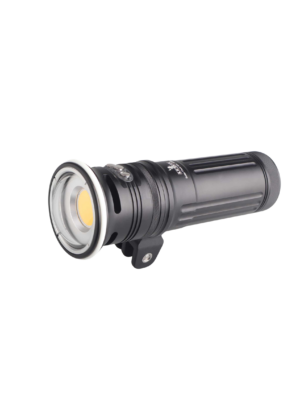
Best Underwater Strobes for Mirrorless Cameras 2026
Best Underwater Strobes for Mirrorless Cameras 2026: Sony, Olympus, Canon
Choosing the right Kraken strobe for your mirrorless camera setup
Moving up to a Sony A6400, Olympus OM-D, or Canon R7? Your strobe needs change. This guide helps you choose between the Kraken S40, S80, and S160 based on what you shoot and what glass you’re running.
Quick Answer: Which Strobe Do You Need?
| ✅ Get the S40 ($359 USD) if you: |
|
| ✅ Get the S80 ($599 USD) if you: |
|
| ✅ Get the S160 ($850 USD) if you: |
|
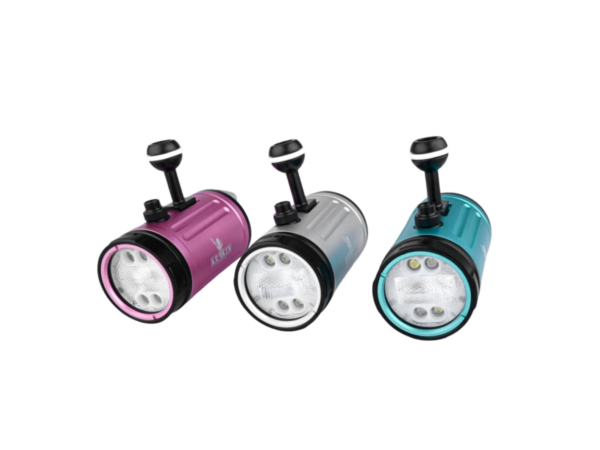
Strobe Comparison: S40 vs S80 vs S160
| Feature | S40 | S80 | S160 |
|---|---|---|---|
| Price | $359 USD | $599 USD | $850 USD |
| Power | 40Ws (GN 16) | 80Ws (GN 22) | 160Ws (GN 30) |
| Recycle Time | 1.2 seconds | 1.0 seconds | 1.8 seconds |
| Video Light | 300 lumens (spot) | 3000 lumens (flood) | None |
| Beam Angle | 60° | 140° | Circular (full coverage) |
| Battery | USB-C rechargeable | USB-C rechargeable | 4x 18650 (replaceable) |
| Best For | Macro only (multiple units) | Macro + moderate wide + video | Serious wide-angle + fisheye |
Strobe Power for Mirrorless: What Actually Matters
Mirrorless cameras are versatile. APS-C sensors (Sony A6xxx, Canon R7) or Micro Four Thirds (Olympus OM-D) give you better image quality than compacts, but your strobe needs don’t change because of sensor size.
It’s still about what you’re shooting, not what you’re shooting with.
Macro with Mirrorless
Close-up subjects, 6-12 inches away. Small area to light. Even at f/11-f/13 for depth of field, you don’t need massive power.
Power needed: 40-80Ws (Kraken S40 or S80)
Why S80 over S40 for mirrorless macro? The built-in 3000-lumen video light. Your mirrorless camera shoots better video than a TG-6. The S80 matches that capability without carrying a separate video light.
But the S40 makes perfect sense if: You shoot macro exclusively and want multiple strobes for creative lighting (key light + fill + backlight). Three S40s ($1,077) cost less than two S80s ($1,198).
Wide-Angle with Mirrorless
This is where mirrorless shines. Fisheye lenses, rectilinear wide-angles, dome ports. You’re lighting large reef scenes, sharks, wrecks. Subjects 3-8 feet away. Aperture f/11-f/16 for corner sharpness and depth.
Power needed: 80-160Ws (Kraken S80 minimum, S160 ideal)
Here’s the reality: A Sony A6400 with a Tokina 10-17mm fisheye behind a dome needs serious strobe power. Don’t under-buy. That’s how you end up back here shopping for S160s six months later.
Kraken S40: The Macro Specialist ($359 USD)
40Ws power | 60° beam | 300-lumen spot light | USB-C rechargeable | 1.2 sec recycle
Perfect For:
- Dedicated macro photographers (nudibranchs, tiny critters)
- Multi-light macro setups (2-3 strobes for creative lighting)
- Budget-conscious mirrorless shooters focused on macro
- Backlight/rim light in dual-strobe macro setups
Real-World Performance
The S40 delivers plenty of power for close-up work. Shooting macro at 6-12 inches? You’ll have power to spare. The compact size makes it easy to position for creative lighting angles.
What it does well:
- Macro subjects at 6-12 inches: Excellent
- Lightweight and easy to position
- Affordable for multi-strobe setups
- Fast 1.2-second recycle time
- ~500 full-power flashes per charge
Limitations:
- 60° beam too narrow for wide-angle
- 300-lumen spot light too weak for video
- No flood video light like S80
💡 Honest Assessment: The S40 is perfect for dedicated macro shooters who want multiple units for creative lighting. Key light + fill + backlight setups become affordable. But if you shoot ANY wide-angle or video, skip to the S80.
Kraken S80: The Mirrorless Standard ($599 USD)
80Ws power | 140° beam | 3000-lumen video light | USB-C rechargeable | 1.0 sec recycle
Perfect For:
- Mixed shooting (macro + moderate wide-angle)
- Photographers who shoot both stills and video
- APS-C mirrorless with moderate wide lenses (16mm-ish equiv.)
- Micro Four Thirds users
- Versatility in one unit
Real-World Performance
The S80 is the workhorse for mirrorless shooters. It handles macro brilliantly, covers moderate wide-angle, and that 3000-lumen video light is genuinely useful (not a gimmick).
What it does well:
- Macro subjects at 6-12 inches: Excellent
- Moderate wide-angle (16-20mm equiv): Excellent
- 4K video lighting: Perfect 3000-lumen flood
- USB-C charging: Convenient for travel
- ~350 full-power flashes per charge
Limitations:
- Fisheye wide-angle: Works at full power (slow recycle)
- f/16-f/18: Pushing limits, S160 better
💡 Honest Assessment: For most mirrorless shooters, the S80 is the right answer. Handles macro and moderate wide-angle, video light saves you $300+, and USB-C charging is convenient. Only go S160 if serious fisheye work is your focus.
Kraken S160: For Serious Wide-Angle ($850 USD)
160Ws power | Circular flash tube | OLED display | 4x 18650 batteries | 1.8 sec recycle
Perfect For:
- Dedicated wide-angle photographers
- Large dome ports (8″ domes)
- Fisheye lenses (Tokina 10-17mm, Canon 8-15mm, etc.)
- Rectilinear wide lenses wanting f/13-f/16
- “I want maximum power and never compromise” mindset
Why the S160 is Worth the Upgrade
If wide-angle is your primary focus and you’re running serious glass (Tokina 10-17mm, Nauticam WWL-C), the S160 gives you power to spare. Shoot f/16 for corner sharpness? No problem. Light a 6-foot reef scene? Easy. The S160 never leaves you wanting more power.
What makes it special:
- Double the power of S80, quadruple the S40
- Circular flash tube: Even coverage, no hot spots
- Future-proof: Works perfectly when you upgrade to full-frame
- Replaceable batteries: Swap 18650s between dives
- ~200-300 flashes per battery set
💡 Honest Assessment: The S160 is overkill for macro. But if you shoot fisheye wide-angle or plan to upgrade to full-frame in 2-3 years, buy once and never look back. Most photographers who “save money” with S80s for wide-angle end up upgrading to S160s within a year anyway.
Specific Camera Recommendations
Best Strobe for Sony A6400/A6600/A6700
The Sony A6xxx series dominates mirrorless underwater photography. APS-C sensor, excellent autofocus, 4K video, relatively affordable. Popular housings from Nauticam, Seafrog, Ikelite.
For Macro: Kraken S40 (multi-light setups) or S80 (single strobe + video)
Sony 90mm macro lens? The S40 gives you plenty of power for close-up work. Want creative lighting with multiple strobes? Buy 2-3 S40s. Shoot video too? Get the S80 for that 3000-lumen flood light.
For Wide-Angle (Tokina 10-17mm, WWL-1): Kraken S160
Fisheye behind an 8″ dome needs serious power. The S160 lets you shoot f/13-f/16 comfortably.
For Video-Focused: Kraken S80
The 3000-lumen video light is perfect for YouTube/content creation.
Best Strobe for Olympus OM-D E-M5/E-M1
Olympus OM-D cameras (Micro Four Thirds sensor) are popular for underwater because of in-body stabilization, compact size, and excellent Olympus/OM System lenses.
For Macro: Kraken S40 (dedicated macro) or S80 (versatile)
Olympus 60mm macro lens? Perfect match with S40 for pure macro, or S80 if you want video capability and moderate wide-angle flexibility.
For Wide-Angle: S80 or S160
S80 works for f/8-f/11 (MFT depth advantage). S160 if you want f/13-f/16 or shoot big scenes.
Best Strobe for Canon R7/R10
Canon’s APS-C RF-mount mirrorless cameras are newer to underwater but gaining traction. Excellent autofocus, Canon RF lens ecosystem, 4K video.
For Macro: Kraken S40 or S80
Canon RF 100mm macro or adapted EF 100mm? S40 perfect for macro-only, S80 if you want video + flexibility.
For Wide-Angle (RF 16mm, Canon 8-15mm): Kraken S160
Fisheye behind a dome needs the S160’s power. Future-proof when you upgrade to R5/R6.
Complete Setup Costs
Budget Macro Setup (S40 – Single Strobe)
| Kraken S40 Strobe | $359 USD |
| Ball mount + arm (8″) | $70 USD |
| Fiber optic cable | $25 USD |
| TOTAL | ~$454 USD |
Creative Macro Setup (Triple S40)
| 3x Kraken S40 Strobes | $1,077 USD |
| Ball mounts + arms (8-10″) | $210 USD |
| Fiber optic cables | $75 USD |
| TOTAL | ~$1,362 USD |
Versatile Mirrorless Setup (S80)
| Kraken S80 Strobe | $599 USD |
| Ball mount + arm (8-10″) | $80 USD |
| Fiber optic cable | $30 USD |
| TOTAL | ~$709 USD |
Serious Wide-Angle Setup (S160)
| Kraken S160 Strobe | $850 USD |
| Ball mount + arm (10″) | $90 USD |
| Fiber optic cable | $30 USD |
| Float collar (recommended) | $50 USD |
| TOTAL | ~$1,020 USD |
Common Questions
S40 vs S80 for mirrorless macro – which should I buy?
Get the S40 if:
- You shoot macro exclusively (no wide-angle, no video)
- You want multiple strobes for creative lighting setups
- Budget matters and you can sacrifice video light
Get the S80 if:
- You shoot macro AND some moderate wide-angle
- You shoot 4K video underwater
- You want versatility in one strobe
- You prefer convenience (USB-C, video light included)
Bottom line: S40 for dedicated macro purists who want multiple units. S80 for everyone else.
Should I buy the same strobes I used with my compact camera?
Depends what you had.
If you had dual S40s: They’ll work perfectly for mirrorless macro. Keep using them.
If you had S80s: Perfect. Keep using them. They scale from compacts to full-frame.
If you had S160s: You already have more than enough power. Keep using them.
One strobe or two for mirrorless?
Start with one, plan for two.
Macro can work with one strobe if positioned well. Wide-angle really benefits from dual strobes—even lighting on both sides, no harsh shadows, better color across the frame.
Budget approach:
- Buy one S40, S80, or S160 depending on shooting style
- Shoot for 6-12 months, learn positioning
- Add a second identical strobe when budget allows
Creative macro approach: Buy 2-3 S40s from the start for key/fill/backlight setups.
Can I mix strobe models (S40 + S80, or S80 + S160)?
Yes, but it’s not ideal.
Pros: Different power levels give you flexibility (S80 key light, S40 fill light)
Cons: Different power output means manual balancing every shot, different recycle times, asymmetric features (S80 has video light, S40 doesn’t)
Better approach: Matched strobes are easier to work with. If you need different power levels, use power settings on matched strobes rather than mixing models.
What accessories do I need?
Essential:
- Strobe arms: 8-10″ carbon fiber or aluminum ($40-80 each)
- Clamps: Need 2 per strobe ($15-30 each)
- Fiber optic cables: Match your housing brand ($25-40 each)
Recommended:
- Float arms: Offset negative buoyancy ($60-100 each)
- Snoots (S40, S80, S160): Dramatic spotlight effect ($80-120)
- Float collars (S80, S160): Make strobes neutrally buoyant ($40-60)
🛡️ Kraken Confidence Guarantee
- 1-Year Warranty – Manufacturing defects covered
- 330ft/100m Depth Rating – Tested and reliable
- 30-Day Returns – No questions asked
- North American Support – Contact us
Bottom Line: Which Should You Buy?
S40 makes sense if:
- You shoot macro exclusively (no wide-angle, no video)
- You want multiple strobes for creative lighting (key/fill/back)
- Budget matters (~$400 per strobe)
- You’re committed to macro photography long-term
S80 makes sense if:
- You shoot macro and moderate wide-angle
- You shoot video underwater (4K clips, YouTube)
- You want USB-C convenience
- You want versatility in one unit
S160 is the better choice if:
- You shoot serious fisheye wide-angle
- You want f/16-f/18 capability
- You plan to upgrade to full-frame in 2-3 years
- You want maximum power and never feel limited
Our honest recommendation: For most mirrorless shooters, start with the S80. It handles macro, moderate wide-angle, and video. The built-in video light saves you $300+ vs buying separate. When you’re ready, add a second S80 for balanced dual-strobe lighting.
For dedicated macro photographers who want creative multi-light setups, the S40 is perfect—buy 2-3 units for key/fill/backlight at a lower total cost than dual S80s.
For dedicated wide-angle shooters running fisheye glass, get the S160. Don’t under-buy on power. That’s the most common mistake.
Last updated: March 2026