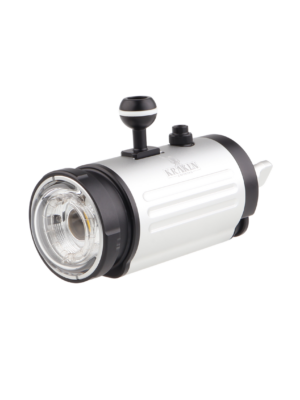
Best Underwater Strobes for Full-Frame Cameras 2026
Best Underwater Strobes for Full-Frame Cameras 2026: Canon, Sony, Nikon
Choosing the right Kraken strobe for professional full-frame underwater photography
Shooting a Canon R5, Sony A7R IV, or Nikon Z8 underwater? You’ve invested in serious gear. Your strobes should match. This guide helps you choose between the Kraken S40, S80, and S160 based on what you’re shooting and what glass you’re running.
Quick Answer: Which Strobe Do You Need?
| ✅ Get the S40 ($359 USD) if you: |
|
| ✅ Get the S80 ($599 USD) if you: |
|
| ✅ Get the S160 ($850 USD) if you: |
|
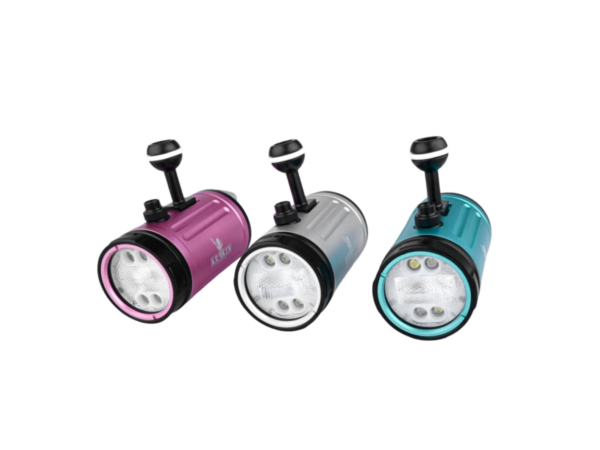
Strobe Comparison: S40 vs S80 vs S160
| Feature | S40 | S80 | S160 |
|---|---|---|---|
| Price | $359 USD | $599 USD | $850 USD |
| Power | 40Ws (GN 16) | 80Ws (GN 22) | 160Ws (GN 30) |
| Recycle Time | 1.2 seconds | 1.0 seconds | 1.8 sec (full) / 1.2s (3/4) |
| Video Light | 300 lumens (spot) | 3000 lumens (flood) | None |
| Flash Tube | 60° beam | Circular (140° coverage) | Circular (full even coverage) |
| Battery | USB-C rechargeable | USB-C rechargeable | 4x 18650 (replaceable) |
| Best For | Macro only (multiple units) | Macro + moderate wide + video | Professional wide-angle + fisheye |
Strobe Power for Full-Frame: What Pros Actually Need
Full-frame sensors don’t automatically need more strobe power. That’s a myth.
But full-frame shooters typically need more power because of how they shoot:
- Larger dome ports (8-10″ glass domes for corner sharpness)
- Fisheye lenses (Canon 8-15mm, Nikon 8-15mm, Sony 12-24mm behind domes)
- Smaller apertures for depth (f/13-f/16, sometimes f/18-f/22)
- Professional expectations (no “good enough,” it needs to be perfect)
You’re not lighting bigger because of sensor size. You’re lighting bigger because you’re shooting bigger scenes with more demanding technical requirements.
Macro with Full-Frame
Full-frame macro (Canon RF 100mm, Sony 90mm, Nikon 105mm) behind a flat port. Subject 6-12 inches away. Even at f/13-f/16 for depth of field, you don’t need massive power.
Power needed: 40-80Ws (Kraken S40 or S80)
The S40 gives you enough light for full-frame macro. The S80 adds that 3000-lumen video light for 8K video on an R5 or Z9. More power won’t improve your macro shots—positioning and diffusion matter more.
Why S40 makes sense for full-frame macro: Professional macro photographers often use 2-3 strobes (key light + fill + backlight). Three S40s ($1,077) cost less than two S80s ($1,198) and give you more creative lighting options.
Wide-Angle with Full-Frame
This is where you need real power. Fisheye lens behind an 8-10″ dome, lighting a reef scene or pelagic subject 4-10 feet away. You’re shooting f/13-f/16 minimum for corner sharpness. Some pros push f/18-f/22 for maximum depth.
Power needed: 160Ws (Kraken S160)
The S80 can do it, but you’ll be running full power constantly. Slow recycle times. No headroom. The S160 lets you shoot f/16 comfortably, recycle quickly (under 2 seconds even at 3/4 power), and never compromise.
If you’re investing in full-frame wide-angle—housings run $3,000+, glass domes $800+, lenses $1,000+—don’t bottleneck with underpowered strobes.
Kraken S40: The Macro Specialist ($359 USD)
40Ws power | 60° beam | 300-lumen spot light | USB-C rechargeable | 1.2 sec recycle
Perfect For:
- Dedicated full-frame macro photographers
- Multi-light macro setups (2-3 strobes for creative lighting)
- Budget-conscious professionals focused on macro
- Backlight/rim light in dual or triple strobe macro setups
Real-World Performance
The S40 delivers plenty of power for full-frame macro. Canon RF 100mm or Sony 90mm at f/13-f/16? You’ll have power to spare at close distances. The compact size makes positioning easy for creative lighting angles.
What it does well:
- Full-frame macro at f/13-f/16: Excellent
- Lightweight and easy to position
- Affordable for multi-strobe professional setups
- Fast 1.2-second recycle time
- ~500 full-power flashes per charge
Limitations:
- 60° beam too narrow for wide-angle
- 300-lumen spot light too weak for 8K video
- Under-powered for fisheye or large dome work
💡 Honest Assessment: The S40 is perfect for dedicated full-frame macro pros who want multiple units for creative lighting. Key light + fill + backlight becomes affordable. Professional macro photographers rarely need more than 40Ws at close distances. But if you shoot ANY wide-angle or video, skip to the S80.
Kraken S80: For Macro and Mixed Shooting ($599 USD)
80Ws power | 140° beam | 3000-lumen video light | USB-C rechargeable | 1.0 sec recycle
Perfect For:
- Full-frame macro photography
- Moderate wide-angle (16mm equiv, not fisheye)
- Hybrid shooters (stills + video)
- Budget-conscious professionals
- Travel photographers who prioritize weight/size
Real-World Performance
The S80 is excellent for full-frame macro. That 3000-lumen video light matches the 8K video capabilities of an R5 or Z9.
What it does well:
- Full-frame macro at f/13-f/16: Excellent
- Moderate wide-angle (14-24mm): Very good
- 8K video lighting: Perfect with 3000-lumen flood
- USB-C charging: Convenient for travel
- ~350 full-power flashes per charge
Limitations:
- Fisheye wide-angle: Works at full power (slow recycle, no headroom)
- f/18-f/22: Not enough power
- Large domes (10″): Struggles at f/16
💡 Honest Assessment: The S80 is perfect for full-frame macro and mixed shooting. The video light is a game-changer for R5/Z9 video. But if serious wide-angle is your focus, keep reading.
Kraken S160: For Professional Wide-Angle ($850 USD)
160Ws power | Circular flash tube | OLED display | 4x 18650 batteries | 1.8 sec recycle
Perfect For:
- Dedicated wide-angle photographers
- Fisheye lenses (Canon 8-15mm, Nikon 8-15mm, Sony 12-24mm)
- Large glass dome ports (8-10″)
- Shooting f/16-f/22 for maximum depth
- “I want the best, period” mindset
Why the S160 is Worth the Investment
The S160 is what most serious full-frame wide-angle shooters end up buying. It gives you headroom to shoot f/16-f/18 without maxing out power. Fast recycle times even at 3/4 power. You never compromise on aperture or lighting.
What makes it special:
- Quadruple the power of S40, double the S80
- Circular flash tube: Even coverage, no hot spots
- Fast recycle even at high power (~1.2s at 3/4 power)
- Replaceable batteries: Swap 18650s between dives
- ~200-300 flashes per battery set
- OLED display: Easy to read underwater
💡 Honest Assessment: Is it overkill for macro? Yes. But if you shoot both macro and wide-angle, dual S160s handle everything. One quiver, any arrow. Most R5/R6 wide-angle shooters I know wish they’d bought S160s from the start.
Specific Camera Recommendations
Best Strobe for Canon R5/R6/R6 II
Canon’s full-frame mirrorless R-series dominates professional underwater photography. R5 for resolution (45MP), R6 II for speed and video, both with excellent autofocus. Popular housings from Nauticam, Aquatica, Ikelite.
For Macro (RF 100mm Macro): Kraken S40 (multi-light setups) or S80 (single strobe + video)
Perfect power for f/13-f/16 macro work. Want creative lighting with 2-3 strobes? Buy S40s. Want 8K video? Get the S80 for that 3000-lumen video light.
For Wide-Angle (Canon 8-15mm, RF 15-35mm): Kraken S160
Canon 8-15mm fisheye behind a Nauticam 230mm dome needs the S160. Enough light for f/16-f/18 corner sharpness.
For Hybrid (Macro + Wide): Dual Kraken S160
One setup handles everything. Never limited.
Best Strobe for Sony A7/A9 Series
Sony’s A7 and A9 series (A7R V, A7 IV, A9 III) are popular for underwater thanks to excellent autofocus, in-body stabilization, and strong lens ecosystem. Housings from Nauticam, Sea&Sea, Ikelite.
For Macro (Sony 90mm): Kraken S40 (dedicated macro) or S80 (versatile)
Enough power for f/13-f/16. S40 for multi-light creative setups, S80 if you want video capability.
For Wide-Angle (Sony FE 12-24mm, WWL-C): Kraken S160
Sony’s autofocus tracks fast subjects (sharks, dolphins). S160’s fast recycle keeps pace.
For Video (A7S III, A9 III): Kraken S80
3000-lumen video light is exactly what you need for professional video work.
Best Strobe for Nikon Z8/Z9
Nikon’s Z8 and Z9 are professional powerhouses. Z9 for sports/action, Z8 for versatility. Both shoot excellent stills and 8K video. Housings from Nauticam, Aquatica, Isotta.
For Macro (Nikon Z MC 105mm): Kraken S40 or S80
Plenty of power. S40 for multi-light macro, S80 for video light + 8K macro clips.
For Wide-Angle (Nikon 8-15mm, Z 14-24mm): Kraken S160
Z8/Z9 sensor resolution (45MP+) resolves incredible detail. S160 gives you power to stop down to f/16-f/18 for maximum sharpness.
For Professional (Dual System): Dual Kraken S160
Magazine work, stock photography, expedition documentation—dual S160s are the right investment.
Complete Setup Costs
Budget Full-Frame Macro (S40 – Single Strobe)
| Kraken S40 Strobe | $359 USD |
| Ball mount + arm (8-10″) | $80 USD |
| Fiber optic cable | $30 USD |
| TOTAL | ~$469 USD |
Professional Macro Setup (Triple S40)
| 3x Kraken S40 Strobes | $1,077 USD |
| Ball mounts + arms (10″) | $240 USD |
| Fiber optic cables | $90 USD |
| Sync cords (backup) | $180 USD |
| TOTAL | ~$1,587 USD |
Full-Frame Macro Setup (S80)
| Kraken S80 Strobe | $599 USD |
| Ball mount + arm (10″) | $90 USD |
| Fiber optic cable | $30 USD |
| Sync cord (backup) | $60 USD |
| TOTAL | ~$779 USD |
Professional Wide-Angle Setup (S160)
| Kraken S160 Strobe | $850 USD |
| Ball mount + arm (10-12″) | $100 USD |
| Fiber optic cable | $30 USD |
| Float collar | $50 USD |
| Sync cord (backup) | $70 USD |
| TOTAL | ~$1,100 USD |
Common Questions
S40 vs S80 for full-frame macro – which should I buy?
Get the S40 if:
- You shoot macro exclusively (no wide-angle, no video)
- You want 2-3 strobes for creative multi-light setups
- Budget matters and you’re focused on macro only
Get the S80 if:
- You shoot macro AND some moderate wide-angle
- You shoot 8K video underwater (R5, Z9)
- You want versatility in one strobe
- You prefer convenience (USB-C, 3000-lumen video light)
Bottom line: S40 for dedicated macro pros who want multiple units for key/fill/backlight. S80 for everyone else.
Why not just buy the biggest strobes available?
Good question. Here’s why S160 is the sweet spot for most pros:
Bigger strobes (200-250Ws) exist, but:
- Heavier (buoyancy becomes a real problem)
- Bulkier (travel logistics, airline weight limits)
- Slower recycle times (more power = longer recycle)
- More expensive ($1,200-2,000 each)
The S160 gives you:
- Enough power for f/16-f/18 (what most pros actually shoot)
- Fast recycle (under 2 seconds at 3/4 power)
- Manageable size/weight for travel
- Reasonable price ($850)
Do I really need two strobes for full-frame?
For macro? You can get away with one if positioned well. Many pros use 2-3 for creative lighting.
For wide-angle? Yes, you really need two.
Here’s why dual strobes matter for full-frame wide-angle:
- Even lighting across the frame. Full-frame fisheye behind a large dome covers a HUGE field of view. One strobe leaves one side dark.
- Eliminates harsh shadows. Balanced lighting from both sides looks professional.
- Flexibility. Reef scenes, pelagics, wrecks—you can position strobes for optimal lighting.
- Backup. If one strobe floods or dies, you can still shoot.
Budget approach: Buy one S40, S80, or S160, learn it thoroughly, add more within 6-12 months.
Can I use my old strobes from my APS-C camera?
If you had dual S40s: They’ll work perfectly for full-frame macro. Keep using them.
If you had dual S80s: Perfect for macro and moderate wide-angle. Adequate for fisheye at f/11-f/13. Keep using them.
If you had dual S160s: You already have exactly what you need. Keep using them.
What accessories do I need for full-frame?
Essential:
- Strobe arms: 10-12″ carbon fiber ($60-100 each)
- Clamps: High-quality ($20-40 each, need 2 per strobe)
- Fiber optic cables: Match your housing brand ($25-40 each)
- Sync cords (backup): Critical for professional work ($50-80 each)
Highly Recommended:
- Float arms: Full-frame rigs are heavy underwater ($80-120 each)
- Float collars (S80, S160): Makes strobes neutrally buoyant ($40-60 each)
- Spare batteries (S160): Extra 18650 sets for liveaboards ($30-50 per set)
How do Kraken strobes compare to Sea&Sea, Inon, Ikelite?
Kraken S160 vs Sea&Sea YS-D3 (160Ws):
Similar power and quality. Kraken has circular flash tube for more even coverage. Kraken: $850 vs YS-D3 $900-1,000.
Kraken S80 vs Inon Z-330 (110Ws):
Kraken has more power (80Ws vs ~70Ws effective) plus 3000-lumen video light built-in. Similar price point.
Kraken S160 vs Ikelite DS161 (160Ws):
Similar power. Ikelite has TTL option. Kraken has circular flash tube. Similar price, choose based on TTL need.
🛡️ Kraken Confidence Guarantee
- 1-Year Warranty – Manufacturing defects covered
- 330ft/100m Depth Rating – Tested and reliable
- 30-Day Returns – No questions asked
- North American Support – Contact us
Bottom Line: Which Should You Buy?
S40 makes sense if:
- You shoot full-frame macro exclusively
- You want 2-3 strobes for creative lighting (key/fill/back)
- Budget matters for multi-light setups
- You’re committed to macro photography only
S80 makes sense if:
- You shoot macro or moderate wide-angle
- You shoot 8K video (R5, Z9)
- You want USB-C convenience
- You travel frequently and prioritize weight
S160 is the better choice if:
- You shoot serious fisheye wide-angle
- You need f/16-f/18 for large dome corner sharpness
- You shoot professionally (magazines, stock, expeditions)
- You want the best and never compromise on lighting
Our honest recommendation: For full-frame macro shooters, the S40 is perfect for multi-light creative setups (key/fill/backlight) at an affordable price. Three S40s cost less than two S80s and give you more lighting options.
For mixed shooters or those who need video, start with the S80. Plenty of power for macro, includes 3000-lumen video light, costs $250 less than S160. Add a second S80 when ready.
For serious wide-angle shooters, get dual S160 from the start. Don’t under-buy. Fisheye lenses behind large domes need this level of power. The S160 gives you headroom for f/16-f/18 without compromise.
Most common mistake: Buying S80s for serious fisheye work, then upgrading to S160s 6-12 months later. If wide-angle is your focus and you shoot f/16+, start with the S160.
Last updated: March 2026